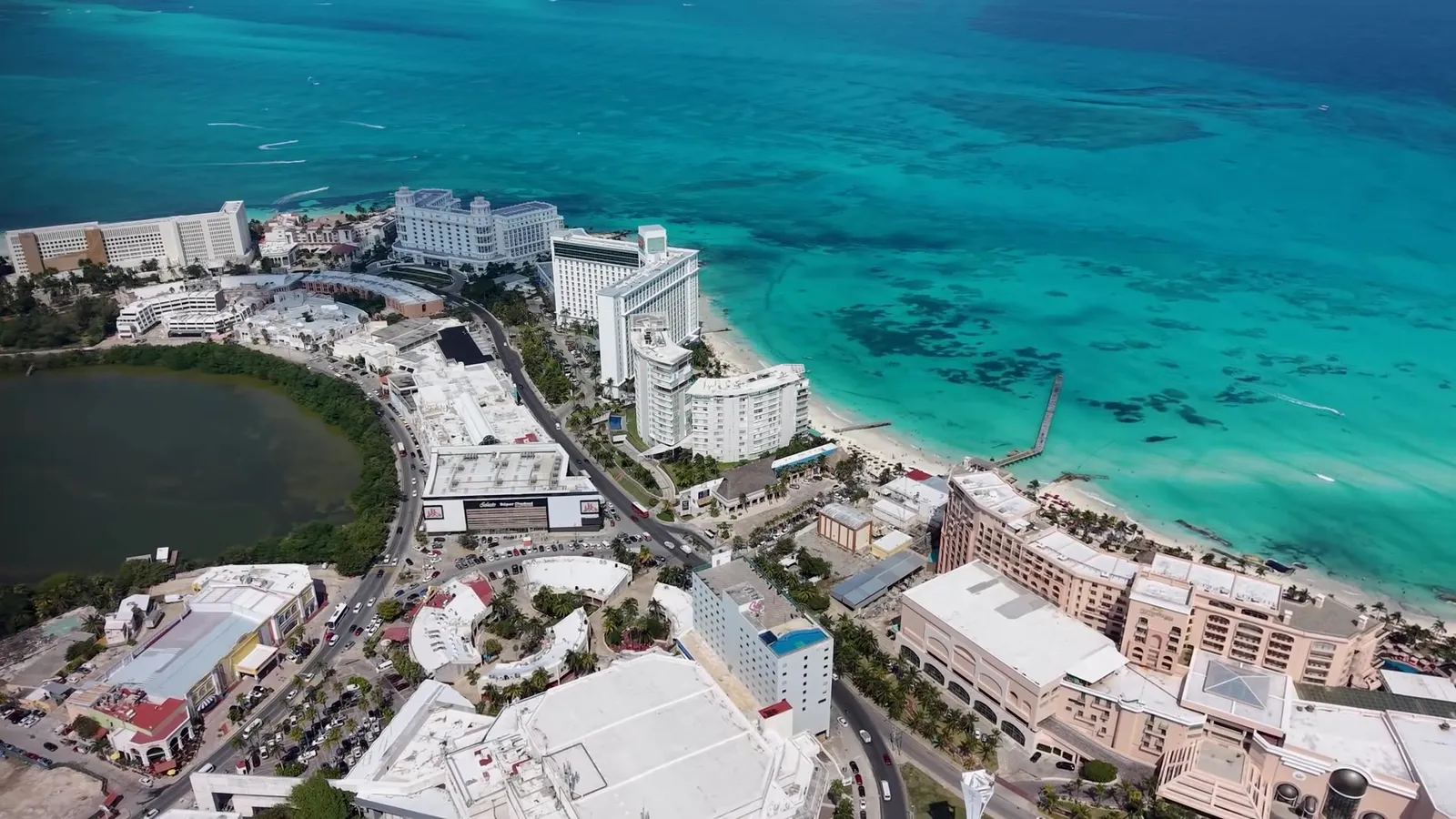
The real estate market in Cancún and the Riviera Maya has its own rhythms. Understanding them, through the latest supply data, can be the key to knowing if it's the ideal time for your investment or home purchase.
Understanding the Rhythms: What Do Asking Prices in Cancún 2026 Tell Us?
The question of the ideal time to buy a property is a recurring one in a market as dynamic as Cancún and the Riviera Maya. At Cancún Prime, we believe the answer is not in a fixed date, but in the ability to read market signals. Our goal is to put data in your hands that would otherwise only be available to developers and through costly market studies. This allows you to make informed decisions, without relying on sales narratives.
As of August 1, 2026, the median asking price in the residential market of Cancún and the Riviera Maya stands at $48,000 per square meter. This figure, which monitors 95 listings in the 5 zones with readings, is the starting point. It's important to remember that this is a median, the typical price found in the middle of all listings, not an average that can be distorted by extreme values. Furthermore, these are asking prices, what sellers are requesting, not necessarily the final closing price.
But what does that median truly mean? By itself, it's just a number. Its true value emerges when we contrast it with variations by zone and trends over time. A healthy market is not static; understanding its fluctuations is crucial. Here, the price per square meter is your main compass, as it allows for 'apples-to-apples' comparisons beyond the total cost of a property, which can vary enormously by size.
The data we present is a snapshot. It doesn't aim to predict the future, but rather to offer a clear instant view of the present so that you, as a buyer, can anticipate trends and evaluate your options on a solid basis. Is it a time of sustained growth, adjustment, or opportunity in specific areas? The answer lies in the details.
Zone-by-Zone Snapshot: Where is the Value per Square Meter Moving in 2026?
When analyzing the zones of Cancún and the Riviera Maya, the differences in price per square meter are significant and reveal specific market patterns. Our cut-off on August 1, 2026, shows a dynamic landscape. The Tulum zone, for example, shows a typical price of $57,027/m², with an increase of 134.2% in price per square meter compared to the previous month. Such a pronounced growth can indicate robust demand, the entry of luxury properties into the market, or rapid appreciation.
In contrast, Playa del Carmen shows a typical price of $56,240/m², but with a 40% decrease in monthly square meter value. This type of adjustment can be a sign of price correction, an increase in supply, or changes in demand. For a buyer, these drops can represent a window of opportunity, especially if looking for a medium to long-term investment and trusting in the resilience of the Riviera Maya market.
Other Cancún zones, such as the Centro, have a typical price of $45,857/m², while Cumbres is at $41,994/m² with a slight monthly drop of 10%. Huayacán, for its part, offers the most accessible square meter among the zones with readings, with a typical price of $21,667/m² and a monthly decrease of 13.9%. This diversity of prices and trends highlights the importance of not generalizing the Cancún market; each zone has its own story.
It is relevant to note the zones that appear "NO READING" due to an insufficient number of listings (n<4), such as Zona Hotelera, Puerto Cancún, Costa Mujeres, Malecon Americas, Lagos del Sol, Álamos, and Jardines del Sur. This may be due to a very limited supply of properties for sale at that time, which often implies higher prices or more private transactions that are not reflected in mass public listings. Monitoring these zones is key to identifying eventual market openings.
Analyzing these monthly fluctuations not only helps you identify potential bargains or high-appreciation areas but also to understand the dynamics of each micro-market. An abrupt rise in Tulum could be seen as a sign of a booming market for investors, while a drop in Playa del Carmen could be ideal for buyers looking for better value.
Understanding price volatility by zone is not just a curiosity; it's a tool to identify where windows of opportunity open or value consolidates.
Negotiation and Progress: The Pre-sale Thermometer as an Opportunity Indicator in Cancún 2026
Beyond the resale market, pre-sales offer a unique perspective on developer sentiment and buyer negotiation power. Our pre-sale thermometer as of August 1, 2026, measures the percentage of units sold in projects under construction, and is a direct indicator of demand and negotiation margin.
When a development has a high percentage of units sold, such as Cozumel (100% sold) or Lagos del Sol (78.8% sold), it means that demand is strong and opportunities to get a preferential price or better payment terms are limited. Here, the developer holds the upper hand. This is common in very attractive projects or in final sales stages, where the price has already been consolidated.
In an intermediate point, zones such as Tulum (69.8% sold) or Puerto Morelos (52.1% sold) present a more balanced scenario. With a considerable number of units still available, developers might be more open to negotiating, offering early payment discounts, or additional amenity packages to accelerate sales. This is often a good point for investors looking for a balance between a reasonable entry price and the security of a project with good traction.
On the other hand, if you find yourself in zones like Cancún Centro (35.5% sold), Playa del Carmen (34.6% sold), or Huayacán (19% sold), the scenario changes dramatically. A low sales percentage indicates that the developer has a greater urgency to sell. Here, the buyer has significantly more negotiation power. It is the ideal time to look for prices below future market value, negotiate improvements, or customize the unit at a lower cost. These are the "buyer's moments" in the pre-sale segment.
In addition to the sales percentage, the "average progress" of the development is also key. A project with a low sales percentage and little progress (like Huayacán with 0% average progress) could offer the best entry conditions for a patient investor. However, it also implies a higher construction risk and a longer waiting time. Knowing these figures allows you to align your purchase strategy with the current state of projects and your personal objectives. If you want to explore these opportunities, we invite you to review our pre-sales section and our guide to buying pre-sale in Cancún.
Who Should Buy and When? Profiles and the Ideal Time in the 2026 Market
The question "When is it best to buy?" does not have a single answer, as it fundamentally depends on your profile as a buyer and your objectives. The data from the Cancún Prime Index allows us to outline strategies for different profiles, maximizing the opportunities that the 2026 market offers.
For the first-time buyer or resident: If your priority is to find a stable home or your first property, you are looking for value and a consolidated area. Zones like Huayacán, with a typical price of $21,667/m², or Cumbres ($41,994/m²), could offer a more accessible entry into the market. Here, it is prudent to observe areas with a low pre-sale percentage (like Huayacán with 19% sold) if you are looking for a new property at a good price, or explore the resale market in more established areas. Prioritize stability and service development in the area over quick speculative gains. Check our properties for sale to explore options.
For the investor seeking returns: Your focus is on capital gains and profitability potential. Tulum's strong appreciation (+134.2% in m² in one month) is a signal to consider, although it may also imply that a significant part of the value has already been captured. Pre-sales in areas with a medium sales percentage (50-70% sold) can be ideal, as they offer a balance between a competitive entry price and a project with proven demand. Monitor developments with low progress and a low sales percentage in emerging areas; this is where the greatest potential for long-term capital gains lies, assuming higher risk.
For the foreign buyer: Legal stability and ease of process are key. In Mexico, the purchase of properties in the restricted zone (50 km from coasts or 100 km from borders) by foreigners is carried out through a bank trust (fideicomiso), with a duration of 50 renewable years. This provides legal security. The purchase time for you might be less linked to monthly fluctuations and more to your usage plans (vacation, retirement). However, understanding the trends by zone will allow you to choose the area that best suits your lifestyle and budget, whether it's the vibrant Riviera Maya or the more residential Cancún Centro. Our fideicomiso guide can clarify your doubts.
Common mistakes to avoid: Ignoring the difference between asking and closing prices. Not researching historical trends of the area beyond one month. Getting carried away by emotion or "marketing speak" without data backup. Every decision should be a combination of your personal situation and an objective reading of the market.
Conclusions and Next Steps: Your Informed Purchase Strategy
The Cancún and Riviera Maya real estate market in 2026 is not a monolith; it is a complex ecosystem with multiple opportunities for the informed buyer. The key to deciding "when to buy" lies in continuous data analysis, understanding that each figure has a story behind it and that your ideal moment is personal, aligned with your objectives.
We have seen how the general market median ($48,000/m²) is just a starting point. The drastic variations between zones, such as the impressive 134.2% increase in Tulum or the 40% correction in Playa del Carmen, demonstrate the importance of granularity in the analysis. These fluctuations are not just numbers; they are invitations to investigate further, to see where demand is booming and where the market might be offering a respite.
Similarly, the pre-sale thermometer is a powerful tool for gauging negotiation power. Knowing whether a development is 100% sold or just 19% gives you invaluable strategic leverage to approach the developer with a well-informed offer. A low sales percentage is the clearest sign that the buyer has room to negotiate and secure a better deal.
In summary, the best time to buy in Cancún is not a date on the calendar, but the moment when you, as a buyer, feel empowered by the data. It's when you understand the signals of growth or adjustment, identify where you have the greatest negotiation power, and align all of this with your financial and lifestyle goals. The Cancún Prime Index is here to be your guide in that process.
We invite you to continue exploring our resources, from property listings to specialized articles, and to use this data to build your purchasing strategy in the vibrant market of Cancún and the Riviera Maya.
THE PRACTICAL RULE
The best time to buy in Cancún is not a universal date, but one when your buyer objectives (residence, investment, vacation) align with market signals (prices by zone, pre-sale percentage, and negotiation power). Use the data to find your personal window of opportunity.
Frequently Asked Questions
What does the median price in Cancún mean?
The median price is the central value in an ordered list of prices. It represents the typical price of a property or per square meter in the market, being less sensitive to extreme values than an average and offering a more accurate picture of reality for the buyer.
How does the pre-sale percentage affect my negotiation?
A low pre-sale percentage (few units sold) increases your negotiation power, as the developer seeks to accelerate sales. A high percentage (many units sold) reduces your margin, as demand is strong and prices tend to consolidate.
Is 2026 a good time to buy in Cancún?
2026 offers moments of opportunity, but it depends on the zone and your profile. Zones with decreases in price per m² or low pre-sale percentages can be ideal for negotiation. Zones with high appreciation can be attractive for high-risk/reward investors.
Which zones in Cancún offer the most affordable square meter?
As of August 1, 2026, the Huayacán zone presents the most affordable square meter among the zones with readings, with a typical price of $21,667/m². This makes it an attractive option for buyers with a tighter budget or who are looking for more space.
| Area | Entry | Typical price ↓ | High | Listings |
|---|---|---|---|---|
| Zona Hotelera | — | no reading | — | <4 |
| Tulum | $3.5 MDP | $4.5 MDP | $5.8 MDP | 42 |
| Playa del Carmen | $5.4 MDP | $7.2 MDP | $8.4 MDP | 13 |
| Puerto Cancún | — | no reading | — | <4 |
| Costa Mujeres | — | no reading | — | <4 |
| Centro | $5.9 MDP | $8.1 MDP | $9.1 MDP | 10 |
| Malecon Americas | — | no reading | — | <4 |
| Cumbres | $5.7 MDP | $7.2 MDP | $9.6 MDP | 4 |
| Lagos del Sol | — | no reading | — | <4 |
| Álamos | — | no reading | — | <4 |
| Jardines del Sur | — | no reading | — | <4 |
| Huayacán | $3.8 MDP | $5.3 MDP | $5.5 MDP | 5 |
Sale price range by area (entry = 25th percentile · typical = median · high = 75th percentile). Tap a column to sort.
