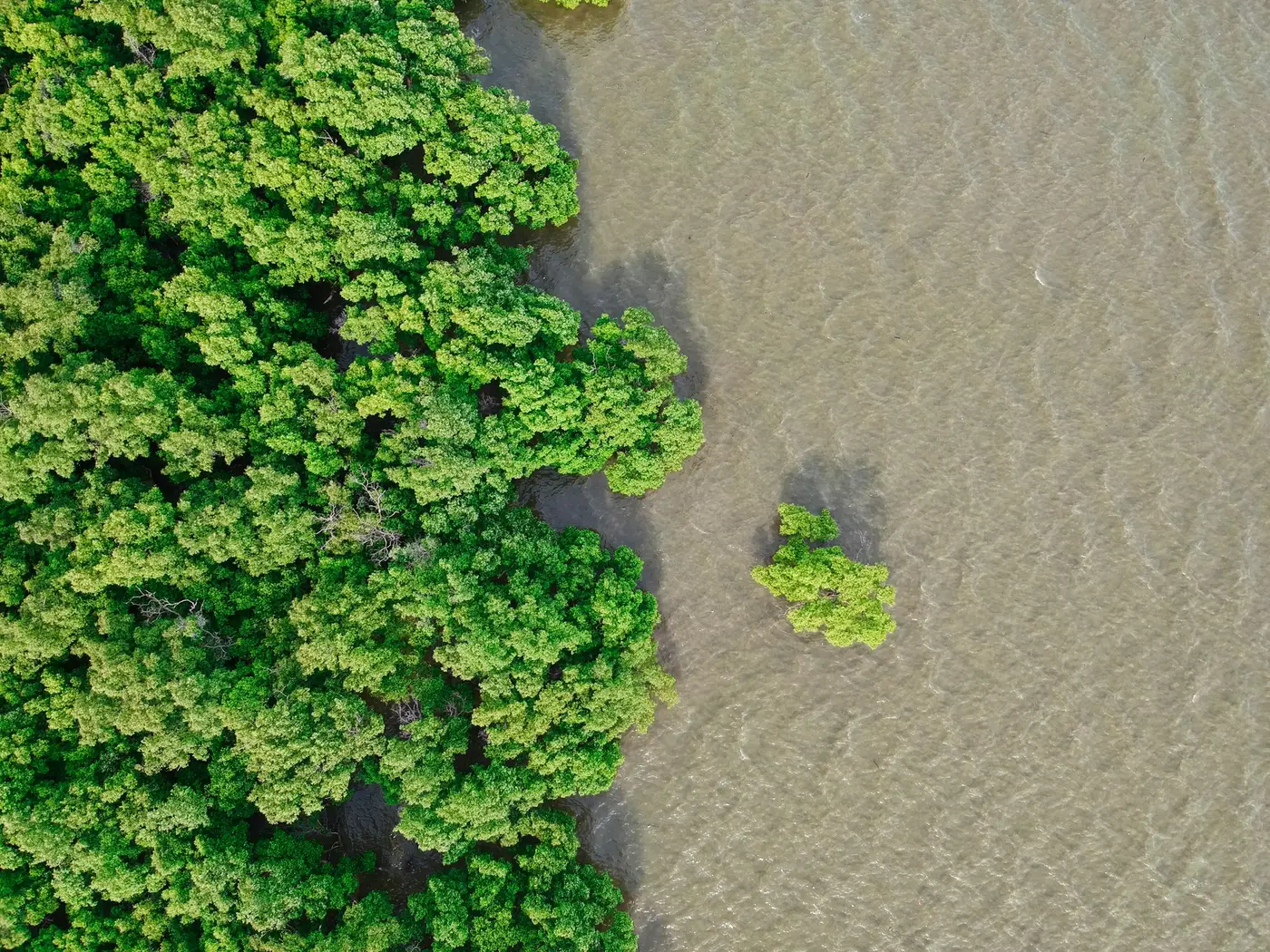
The recent announcement of mangrove restoration by Cancún International Airport is not just environmental news. It's a clear signal from the real estate market about how ecological factors are beginning to directly impact the value of your investment. We tell you what to look for beyond the price per square meter.
The News: A breather for Cancún's mangroves, a factor for your property?
On August 14, 2026, Reportur reported that Cancún Airport will restore mangroves to offset its pollution. This news, seemingly only environmental, is an important indicator for the region's real estate market. Mangroves are not just a vital ecosystem; they are a natural barrier against hurricanes, a water filter, and a support for biodiversity that ultimately contributes to the quality of life and tourist appeal of Cancún and the Riviera Maya.
For a property buyer, this type of announcement sets a precedent. Data normally reserved for developers and expensive market studies are now available to everyone to understand the implications. A healthy and well-managed natural environment translates into a higher perceived and real value for nearby properties. Mangrove restoration, in this sense, is not just an act of environmental mitigation, but an investment in the natural capital that sustains land value in one of the world's most important tourist areas.
This event underscores a growing trend: sustainability and environmental impact are no longer just topics of conversation but tangible factors that are beginning to influence purchasing decisions and long-term valuation. It is a reminder that a property's location, beyond its proximity to services or beaches, also includes the health of its surrounding ecosystem. While the direct impact on day-to-day prices may not be immediate, the precedent set by such actions is undeniable for the future stability of the Cancún real estate market.
What do prices in Cancún say before the mangroves recover?
As of August 1, 2026, the complete market monitored by the Cancún Prime Index shows a median of $48,000 per square meter, with 95 listings and 5 zones with sufficient readings. It is important to remember that these are asking prices (offer), not closing prices, and that the median represents the typical price (the middle one, not the average) in the market.
The current reality of prices by zone does not yet explicitly reflect the value of restored mangroves, but it does give us a basis for understanding the differences. For example, in Tulum, the typical price is $57,027 per square meter, with an entry band of $3.5 MDP and a high of $5.8 MDP, and an increase of 134.2% in price per m² compared to the previous month. In contrast, Huayacán, a growing area within Cancún, presents a typical price of $21,667 per square meter, with an entry range of $3.8 MDP and a high of $5.5 MDP, and a decrease of 13.9% in price per m².
This disparity of more than double between the square meter in Tulum and Huayacán underscores how the perception of value, infrastructure, and the general attractiveness of an area already generate significant differences. While the environmental factor is not broken down as a line item in the asking price, it is implicit in the overall appeal. Areas with greater proximity to preserved nature or with an image of sustainability could see, in the future, a consolidation or even an increase in their relative value, while areas with unresolved environmental challenges could face pressure. It is a silent factor that, with news like that of the airport, is beginning to gain a voice in the buyer's calculation.
Who is impacted by the environmental value per m²: From resident to investor
The environmental health of a region, and particularly actions like mangrove restoration, has varied implications depending on the buyer or owner's profile:
- For the Local Resident: Mangrove restoration means better air quality, protection against floods, and a more pleasant environment. This translates into greater well-being and, in the long term, a more stable appreciation of their property, as the area becomes more desirable to live in.
- For the Pre-sale Investor: Those who buy in pre-sale must consider that developments in areas with visible environmental commitment or in well-preserved environments could have an advantage in future capital gains. According to the pre-sale thermometer, areas like Tulum have 69.8% sold with 19 developments, indicating an active market where differentiation by environmental factors could be key. In contrast, Huayacán, with 19% sold, still has room to integrate these values.
- For the Foreign Buyer: This segment is often more sensitive to sustainability and ecological criteria. A pristine environment or the effort to restore it can be a decisive factor, influencing their willingness to invest in a property they perceive as part of a healthy ecosystem with a future vision.
- For the Rental Market: Natural beauty and environmental health are pillars of Cancún's tourist appeal. Properties located in areas where there is a perceived commitment to ecology can command higher rental rates and maintain more consistent occupancy, given that tourists seek authentic experiences and well-preserved environments.
In summary, although the impact on prices may be gradual, awareness of environmental value is growing and becoming a competitive differentiator in the pre-sale market and existing properties. It is a factor that, while not printed on the technical data sheet price, is increasingly present in the minds of informed buyers.
«Mangrove restoration is not just an act of environmental mitigation, but an investment in the natural capital that sustains land value in one of the world's most important tourist areas.»
Beyond the price per m²: The practical rule when buying properties in Cancún
If you are considering buying a property in Cancún or the Riviera Maya, the news of the airport's mangrove restoration is a reminder that your analysis must go beyond square meters and amenities. It is essential to investigate the environmental health of the area where you are interested in investing. Ask about long-term development plans, waste management, protection of natural areas, and the commitment to sustainability of developers or the community.
A property in an environment that invests in its natural capital is not only more pleasant to live in or vacation; it is a more resilient investment. Consider how ecological factors can influence the future appreciation of your property. A well-preserved environment can mean higher demand, better quality of life, and ultimately, greater long-term resale value. Do not underestimate the power of a healthy ecosystem as a key differentiator in the real estate market.
Finally, remember that announcements and promises are a first step. Execution and results take time. Stay informed through reliable sources like the Cancún Prime Index and consider the developers' track record and reputation regarding their environmental commitment. A conscious investment today can mean sustainable value tomorrow.
THE PRACTICAL RULE
An announcement is not a delivery. Mangrove restoration is a long-term project. When buying, value the environmental health of an area as a tangible and future investment factor, but verify real progress and commitment. Do not assume that value will be generated by a declaration; look for evidence of action and monitoring.
Frequently asked questions
How does mangrove restoration impact the value of my property in Cancún?
Mangrove restoration improves the environmental quality of the area, offering benefits such as natural protection, better air quality, and increased tourist appeal. This can translate into more stable appreciation and a higher perceived value of properties in the long term, although the direct impact on price per m² is not immediate.
Which areas of Cancún are most sensitive to environmental factors in their prices?
Areas highly dependent on tourism or with an image associated with nature, such as Tulum or certain areas of the Riviera Maya, are more sensitive. Foreign buyers and pre-sale investors increasingly value healthy and sustainable environments, which can influence future demand and prices in these areas.
Should I consider environmental aspects when buying a pre-sale property in Cancún?
Yes, absolutely. Environmental aspects, such as proximity to protected natural areas or a development's commitment to sustainability, can be key differentiators. A healthy and well-managed environment increases the attractiveness and resilience of your pre-sale investment against future changes in market preferences.
Where can I find reliable information about property prices in Cancún?
The Cancún Prime Index (cancunprimerealestate.com) is a monthly source of verified data on prices in the residential market of Cancún and the Riviera Maya, offering a clear and unbiased snapshot for interested buyers.
